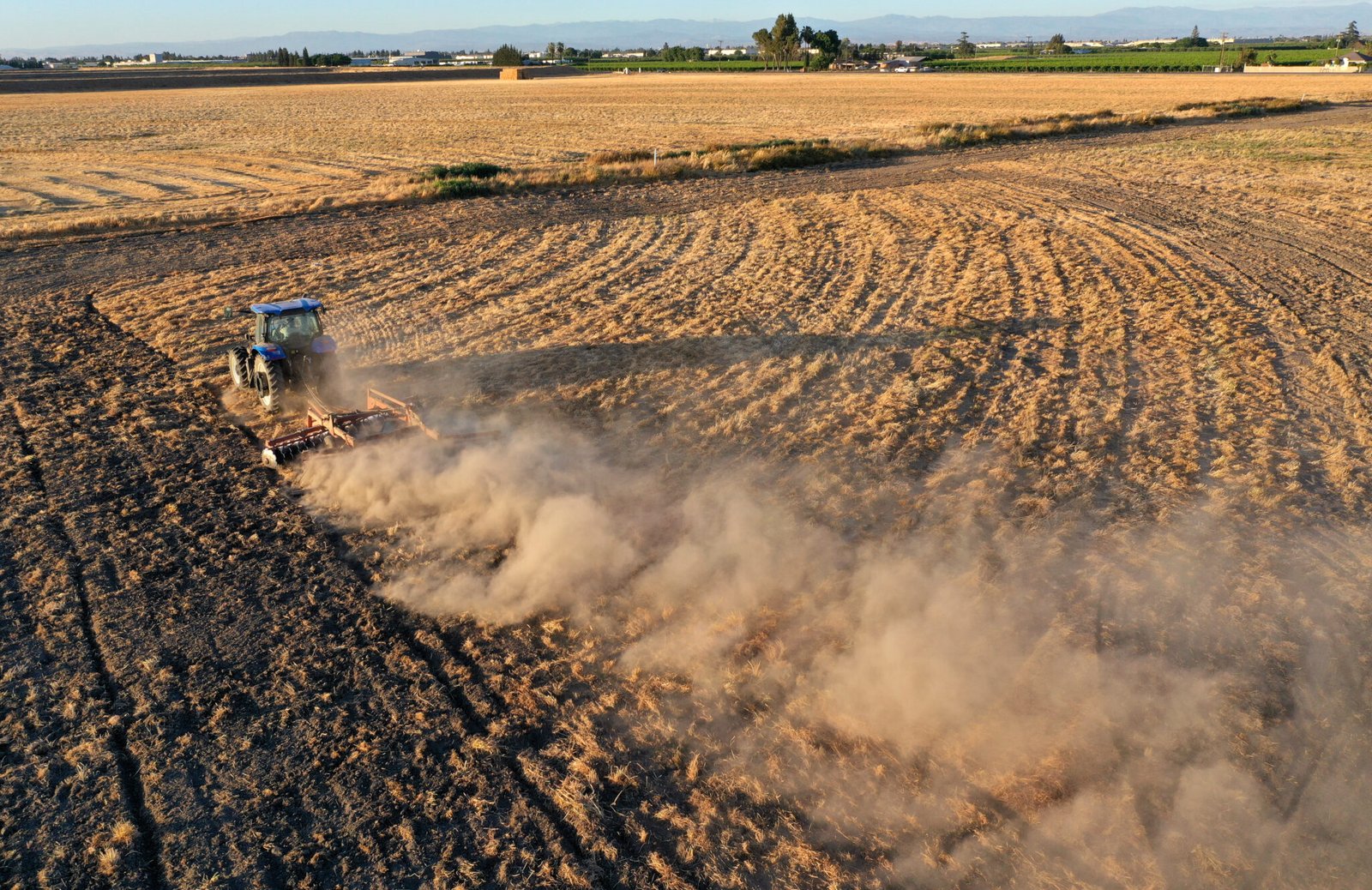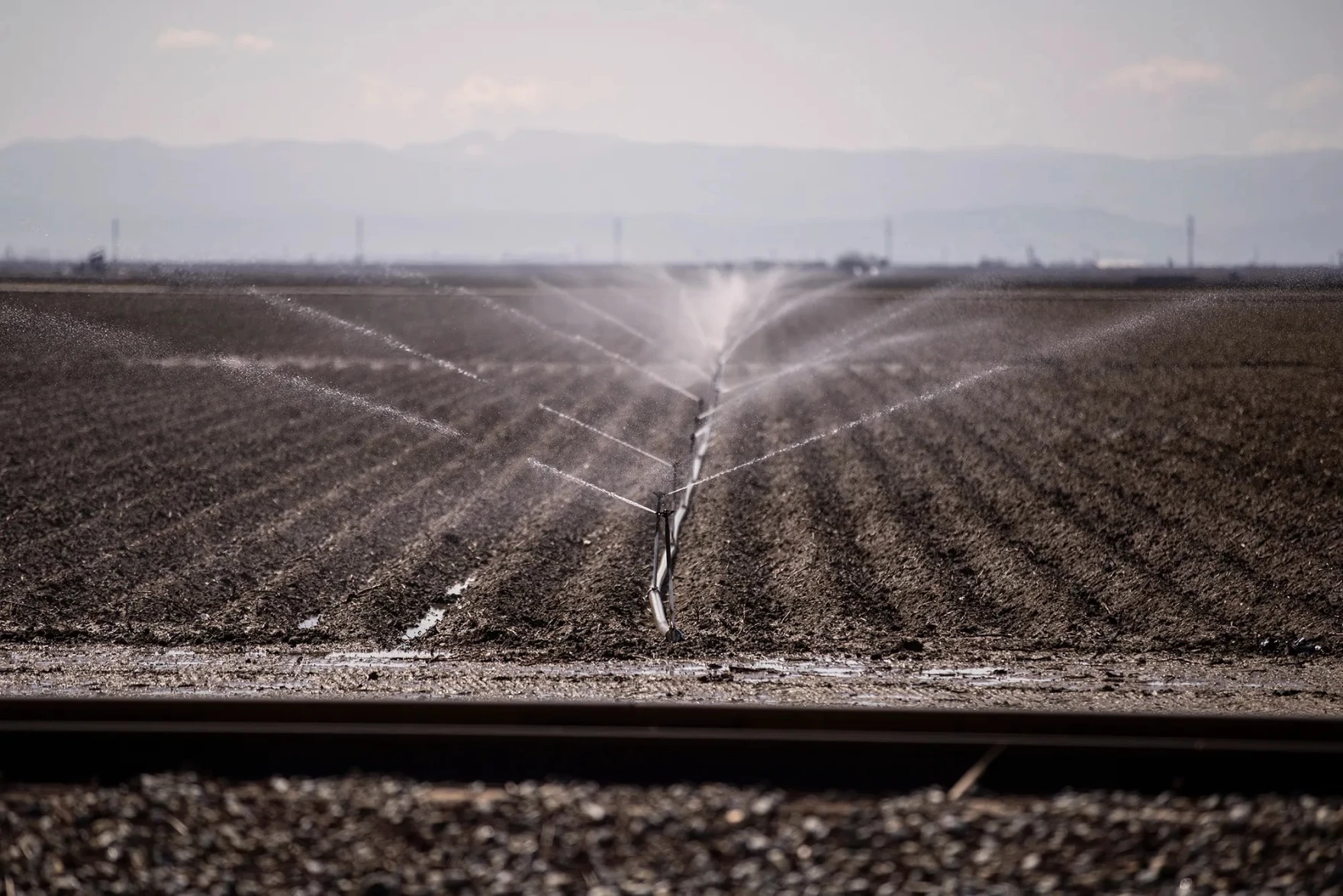
In the heart of California’s Central Valley, generations of farm families are facing a new kind of crisis: what farmers argue is a man-made drought. It’s mounting water regulations that could determine whether the most fertile farmland in the nation survives.
On Hansen Ranch in the Central Valley, fifth-generation farmer Erik Hansen grows a little bit of everything — pistachios, almonds, pomegranates, alfalfa, corn for silage and cotton.
“We farm 15, 16 different crops,” Hansen says. “Cotton is our biggest acreage crop, and that’s in the form of Pima cotton.”
That diversification has long been the Hansen family’s survival strategy. But in spring 2023, no amount of crop rotation could shield them from disaster.
“Where we’re standing right now was underwater,” Hansen recalls. “A mile from here, over by that PG&E substation, was the edge of the lake.”
The flood wiped out 600 acres of pomegranates and 400 acres of pistachios. One thousand acres of permanent crops gone in one season.
“It was a massive hit,” Hansen says. “We had about 5,000 to 6,000 acres under water. Some of that water lasted for over a year.”
From Too Much Water to Not Enough
The irony is hard to ignore: In 2023, floodwaters destroyed thousands of acres. Now, Hansen says it’s the lack of access to water that could cripple farms across the Central Valley.
“The last projections I heard were anywhere from 1 million to 1.2 million acres totaled in the valley,” he says, referring to farmland that could be idled by the Sustainable Groundwater Management Act (SGMA).
Passed in 2014, SGMA requires local agencies to reduce groundwater overdraft and achieve sustainable use by 2040. On paper, Hansen says, that makes sense.
“To some extent it is good because you have to have a way to manage the overdraft,” he explains. “The problem is there are surface water facilities we developed back in the 50s and 60s that we’re just not using. A lot of that water is going out to the Pacific Ocean.”
For Hansen, the politics sting. He believes decades of state decisions — prioritizing fish and wildlife, reallocating water, and neglecting infrastructure — set up today’s crisis.
“I’m frustrated because the families that have been farming here for years, some decades, sometimes even more, are being footed with a bill for problems that somebody else created,” Hansen says. “If the state doesn’t look in the mirror, I think we’re going to find ourselves in the same position again.”
“We’ve prioritized so much environmental legislation that more than 80% of our water is pushed out immediately to the ocean, unnaturally,” he says. “Meanwhile, farmers get less water and more land goes out of production.”